The Art of Slow Living Photography | Mindfulness Through Images
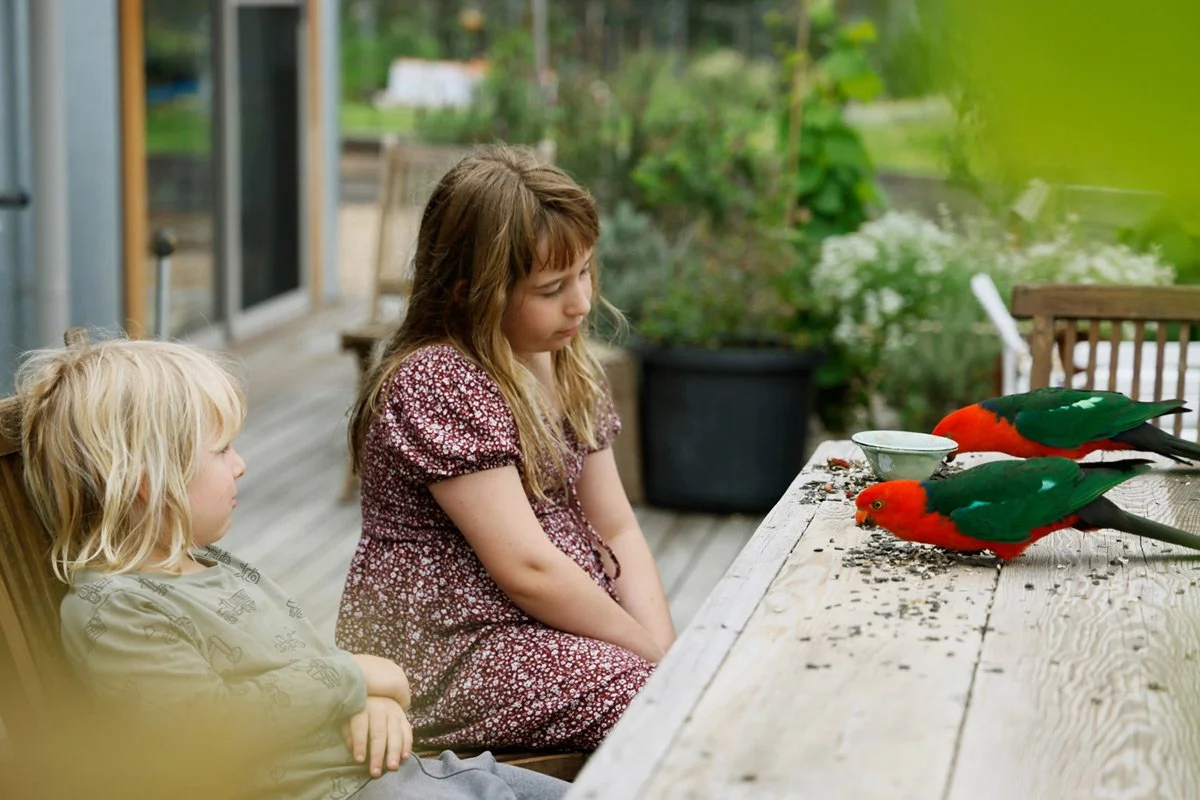
Siblings during school holidays feeding sunflower seeds to the King Parrots that kept hassling us each morning.
A life shaped by noticing
I’ve been taking photographs since I was fifteen, which feels like a lifetime ago now. I started in high school, right in the thick of the teenage years, a time filled with self-doubt, uncertainty, and that constant sense of not quite knowing where you fit. Learning photography during that time gave me something grounding to hold onto.
There was something incredibly empowering about having an idea, photographing it that same day, then heading into the darkroom to develop the film and print the image. Seeing something move from concept to reality through my own hands gave me a sense of purpose and confidence. It made me feel capable. Like I could shape something in my life, even when everything else felt uncertain.
Living life through a lens from such a young age has shaped not only how I photograph, but how I see the world. Photography trained my eye to notice light, texture, and fleeting moments, and over time, that way of seeing became part of who I am.
Table of Contents
Photography as a mindfulness practice
There are times when I question whether photographing everything gets in the way of actually living. Sometimes it probably does. There are moments when the instinct to document can pull me out of the experience itself. But over the years, I’ve realised that the benefits far outweigh the negatives.
For me, photography is not really about sharing images or receiving feedback. The act itself has become something much deeper. It has become a practice of mindfulness, a way of slowing my attention and reconnecting with the present moment.
Photography invites me to notice what is already there. The light filtering through a leaf and revealing every vein. The early morning sun casting shadows across my child’s face through a window. A row of trees softened by fog, glowing briefly before the day fully arrives. These moments are quiet and ordinary, and they are easy to miss when life feels rushed. Yet when I pause to notice them, even for a few seconds, something shifts.
This way of working with a camera is sometimes described as slow living photography, but for me it’s less about the label and more about intention.
slow living does not mean a slow life
Photography as a mindful practice is not about magically creating a slower life. It’s simply one helpful tool in the toolkit. My days are full, and I rush more than I care to admit. Between caring for my children, tending the garden, cooking from scratch, working, preparing for shoots, and keeping everything moving, there is very little that feels slow about the structure of my days.
I’m not pretending otherwise. Each year, I’m learning how to reduce the rushing and live more mindfully, but it’s very much a work in progress. In a world driven by growth and constant momentum, choosing a slower way of living is not a small task.
I also know I’m not alone in this. When I speak to other women and friends, especially women in business, there’s often a shared understanding of that low-lying tension always bubbling away. The mental load of balancing work, family, relationships, and responsibility, while often being the steady or calm one in the room. That energy has to go somewhere. If it doesn’t have an outlet, it can turn into anger or resentment.
For me, anger is a creativity killer. The act of noticing through photography takes some of the power out of that emotion. It brings me back into my body. Often, it gives me just enough space to take a breath and soften the edge of my day.
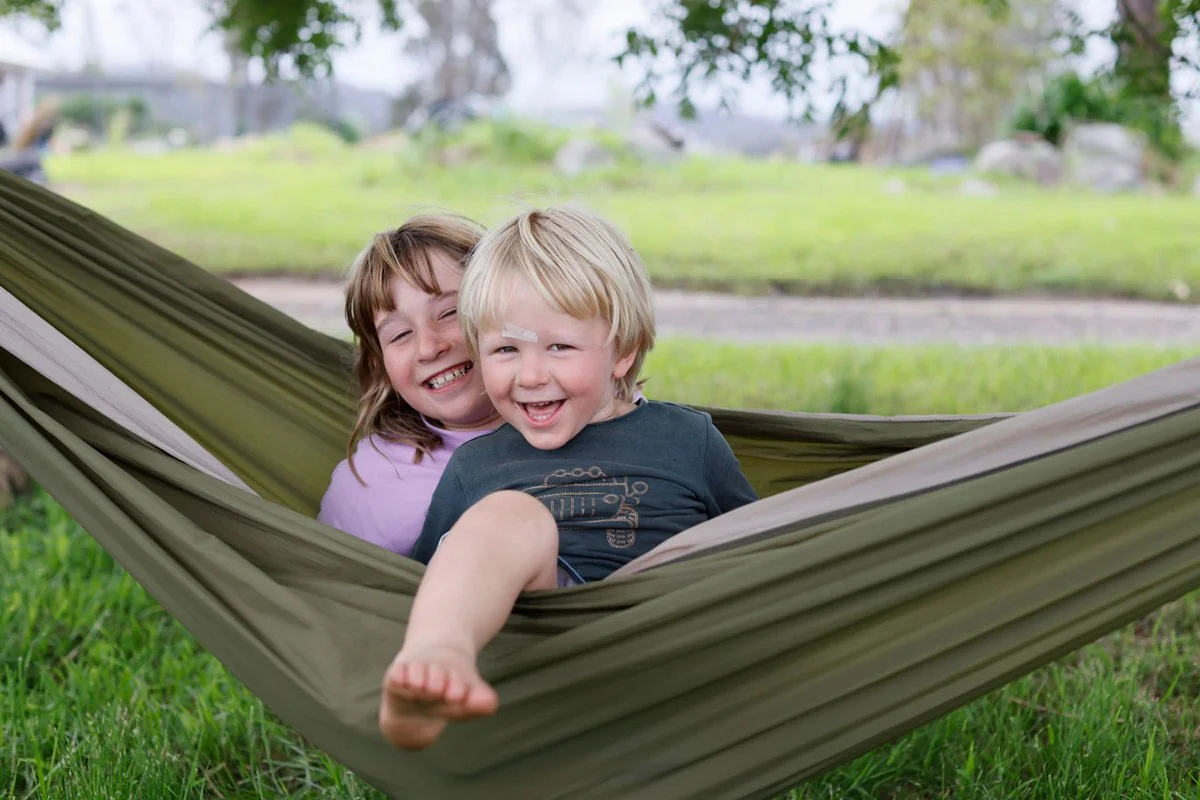
Siblings playing in their new Christmas present hammock under one of the few shade trees we have. The youngest busted his head at a friends house, their faces are softer and rounder - how much they have already changed since 2023.
Simplicity in everyday moments
I often think of photography as a form of active meditation. Not the kind that requires silence or long stretches of time, but the kind that gently anchors you back into the moment. Much like pausing to drink a cup of tea and actually noticing its warmth, its smell, and the steam rising from the cup.
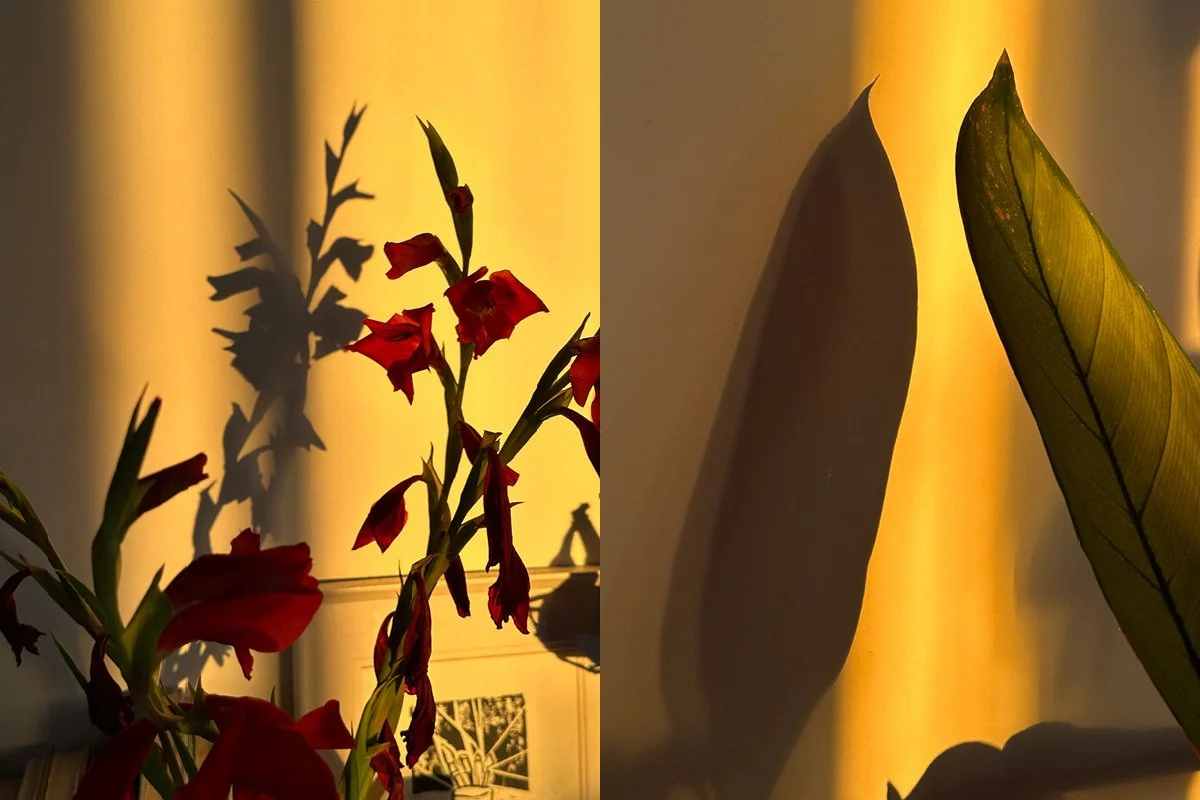
This is where mindfulness and simplicity intersect for me. Photography asks very little. It doesn’t require special equipment or a perfect setting. Often I’m using my phone, capturing moments as they unfold naturally. A shaft of light on the kitchen wall. Dust floating in the air. The way shadows move across the floor as the sun shifts.
This approach sits naturally within lifestyle photography, where the focus is on observing real life rather than staging it. It’s about allowing things to be as they are, and trusting that everyday moments hold enough beauty on their own.
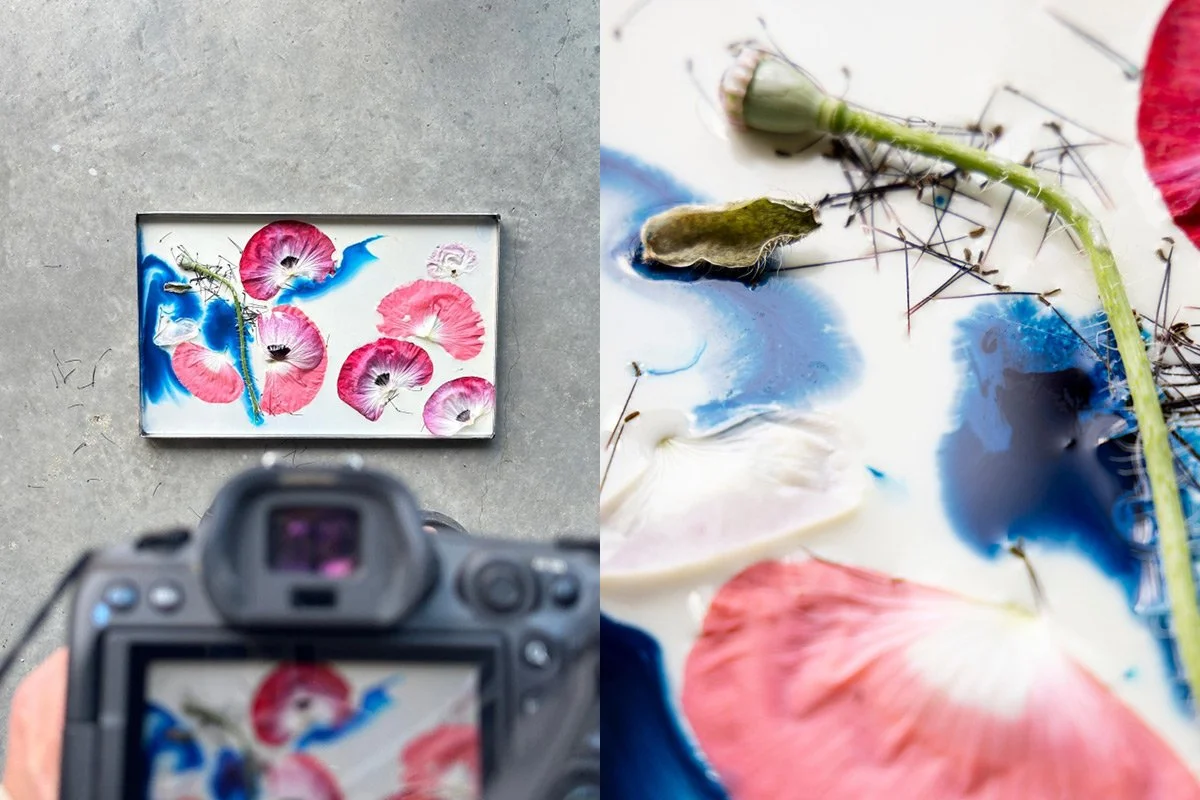
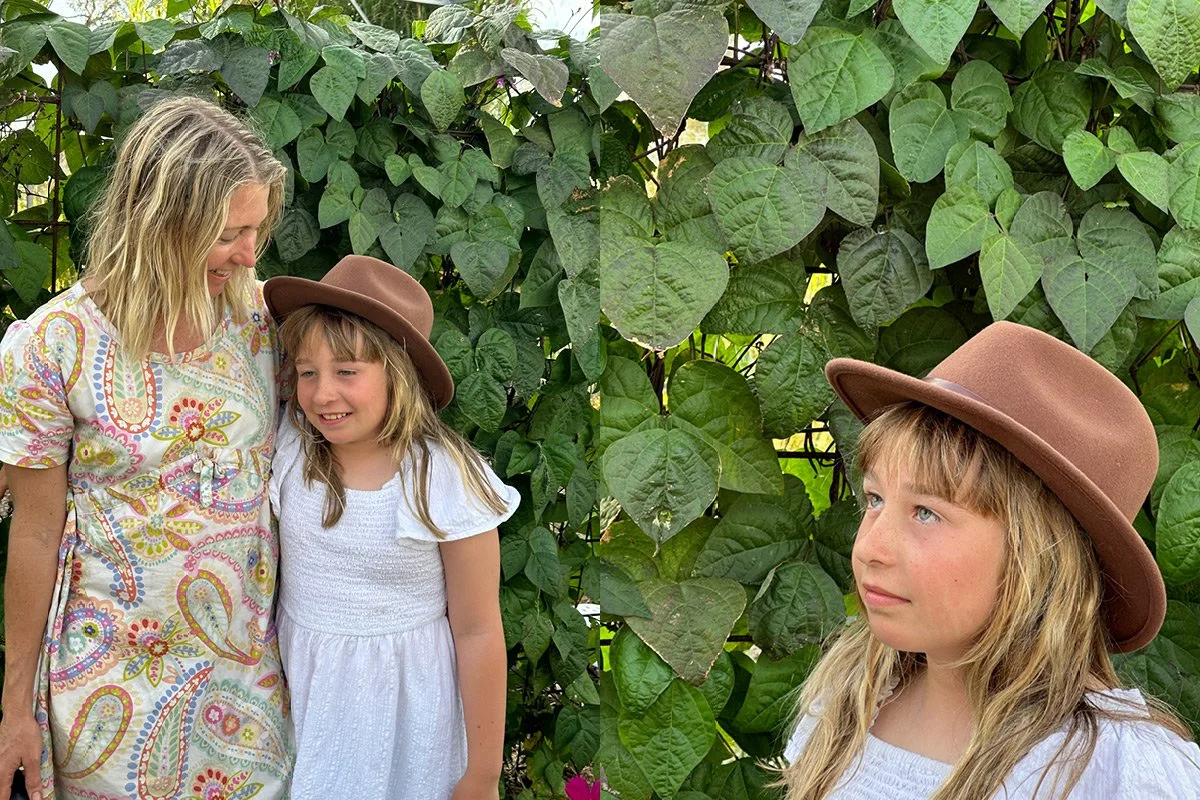
BTS from a personal project I shot of the summer holidays a few years ago. Milk in poppies, I love seeing these reminders that I in fact capture personal work.
When photography becomes personal
Photography isn’t for everyone, and I don’t believe it needs to be. But I do believe there is real merit in having some kind of creative practice as an act of mindfulness. It might be photography, but it could also be picking flowers from the garden, planting seeds, arranging shells on the beach, or styling a small corner of your home.
What matters is the commitment to noticing. To regularly paying attention to the tiny details around you that are quietly magical. It’s not about pretending your life is suddenly better. It’s about choosing a few moments of beauty within it. Like any practice, it’s a muscle. The more you use it, the stronger it becomes.
What I love most is noticing change within the same familiar scenes, especially as the seasons shift. There’s a particular quality of light that appears in my home for a few short weeks in autumn and spring. It comes through at just the right angle, illuminating a cluster of indoor plants and casting a golden glow across the leaves and wall behind them. Then the season changes, the angle shifts, and that light never quite lands in the same way again.
Many of these moments I photograph or simply observe never get shared. Some do, but most are just for me. A creative itch. A way of anchoring myself back to now. You don’t have to be making anything for anyone else. It can exist purely for you.
A life shaped by seeking beauty
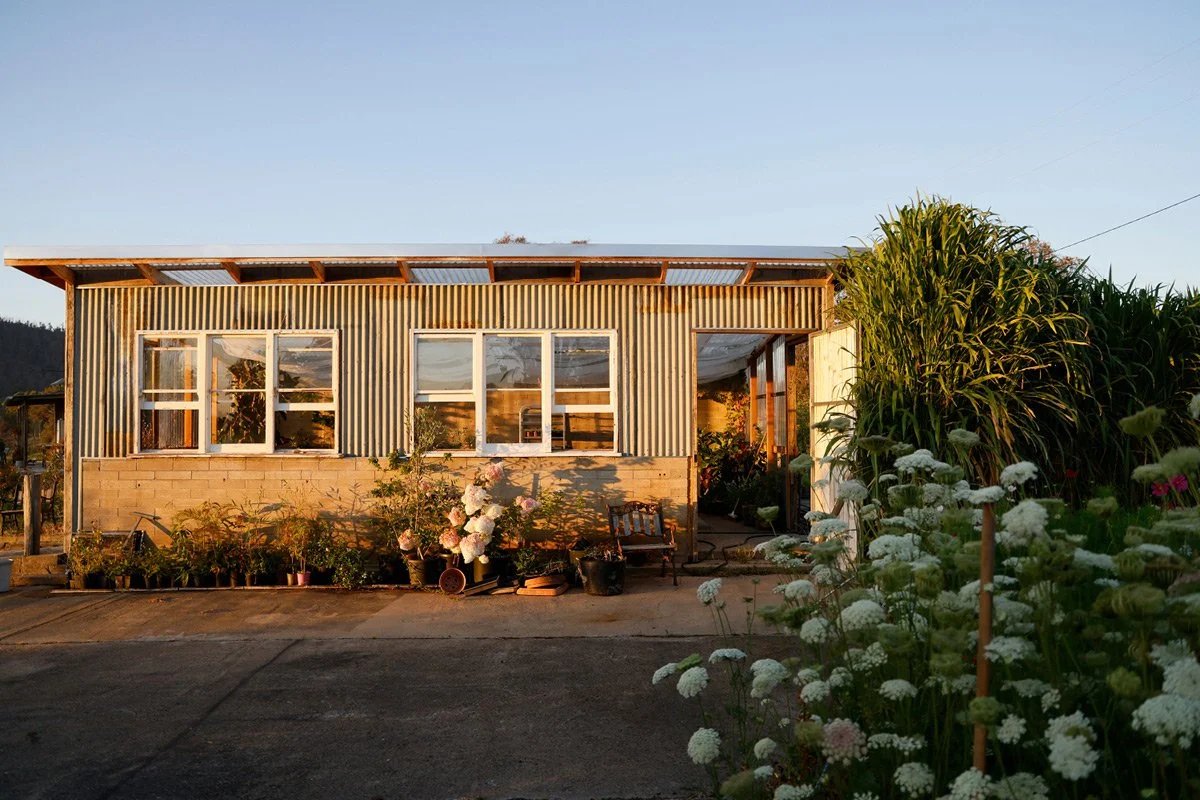
Being a photographer has changed the course of my life. It has shaped the way I live, the house we’ve created, and the garden we tend. Our home was designed using solar passive principles, with large windows that invite light in, but I also thought carefully about where those windows sat. I wanted to be able to admire the garden closely, to watch what was flowering, and to wake in the morning and see beauty before the day fully began.
I’ve painted the walls white in almost every place we’ve lived, simply because I love how clean light moves through a space. Even the way the garden is planted is for beauty’s sake, which, in the end, is deeply connected to photography. This way of seeing has extended far beyond my work and into the life we’ve built.
I love looking back through old photos and albums. They hold moments in time I would have otherwise forgotten. My daughter wearing her hair in pigtails while eating porridge. Newly planted trees blossoming for the first time, trees that are now tall and established. These images anchor me back to specific years, days, and seasons, and remind me of the wild, beautiful ride our lives have been, along with the many ambitious and sometimes slightly mad projects we’ve taken on.
Why this matters right now
This feels especially important now. Many of us are balancing full lives while quietly craving more presence and meaning. In times like this, small acts of mindfulness are not insignificant. They are a way of reclaiming ourselves within the busyness.
Photography offers one such pathway. It doesn’t fix everything, but it can gently bring us back to ourselves.
I plan to explore this idea further by drawing on the work of others who speak thoughtfully about mindfulness, breath, and the nervous system, including reflections from Jodie Wilson in this wonderful podcast by Avant Gardeners. Her insights around ‘soft fascination’, presence and regulation feel closely aligned with what I have experienced through photography over many years.
As I was finishing this article, a beautiful and inspiring video by Erin from Floret arrived in my inbox, touching on many of the same ideas I’ve written about here. I love when those small moments of alignment appear.
An invitation to notice
For now, my invitation is simple. You don’t need to slow your entire life down. You don’t need to create more space or time.
You can begin by noticing one small thing today.
The light. A shadow. A moment that feels quietly beautiful.
Whether you photograph it or not, the act of noticing is enough.
Want to put this way of seeing into practice?
If you’re drawn to the idea of slow living photography but don’t know where to begin, my phone photography course offers a supportive place to start. It’s focused on mindfulness, simplicity, and learning how to capture everyday moments with ease and how to capture warm, genuine personal brand photography without chasing perfection or trends.
And sometimes, having your life and work thoughtfully documented through personal brand photography can be a powerful way of honouring the season you’re in and the business you’ve built.
Frequently asked questions about slow living photography
-
For me, mindful photography is about using the camera as a way of noticing rather than producing. It’s less about the final image and more about the pause, the attention, and the moment you’re in while taking it.
-
The terms are often used interchangeably, but I think of slow living photography as the outward expression, a gentler, more intentional way of photographing everyday life. Mindful photography is the internal experience of slowing your attention and being present. The two naturally overlap.
-
Not at all. I use my phone often. This approach is about awareness, simplicity, and capturing moments as they unfold, not about equipment or technical perfection.
-
Photography can offer small moments of relief within full days. Pausing to notice light, texture, or movement can help regulate your nervous system and bring you back into your body, even briefly.
-
Start small. Light through a window, shadows on a wall, reflections, or a single colour. You don’t need to go looking for something special. Often it’s already there.